
Mortar and Grout Matched to the Job
Tile and Custom Showers in Copperas Cove for bathrooms exposed to Central Texas hard water and humidity cycles
Custom tile work and shower builds in Copperas Cove and Harker Heights face hard water mineral content and humidity cycles that stress grout joints and accelerate deterioration when installers default to a single mortar and grout product on every job regardless of tile format or substrate. Mortar mix selection depends on tile size, substrate type, and whether the installation sees wet or dry exposure—large-format porcelain requires different bonding agents than small mosaic glass, and steam showers demand epoxy grout where standard cementitious grout fails within months. Renno-Pro specifies materials based on the application rather than habit, applying a science-driven selection process to custom shower and tile installations across the Central Texas service area.
Material specification begins with identifying tile format, substrate composition, and exposure conditions before any product gets ordered. Large-format tiles need thin-set mortars with extended open time and non-sag properties, natural stone requires pH-neutral adhesives that do not stain, and wet areas demand waterproofing membrane integration with mortar that bonds to the barrier without compromising the seal.
Request a consultation to review tile options and discuss custom shower scope for your bathroom.
What Material Specification Prevents
Mortar type affects bond strength, flexibility, and resistance to water migration—polymer-modified thin-set provides stronger adhesion and flex tolerance than unmodified mixes, medium-bed mortars accommodate substrate irregularities that thin-set cannot bridge, and epoxy-based adhesives suit applications where chemical resistance or extreme moisture exposure exceeds standard product capabilities. Grout selection follows similar logic: epoxy grout resists staining and mold in steam showers, urethane grout offers flexibility at change-of-plane joints, and standard cementitious grout works in dry areas with proper sealing.
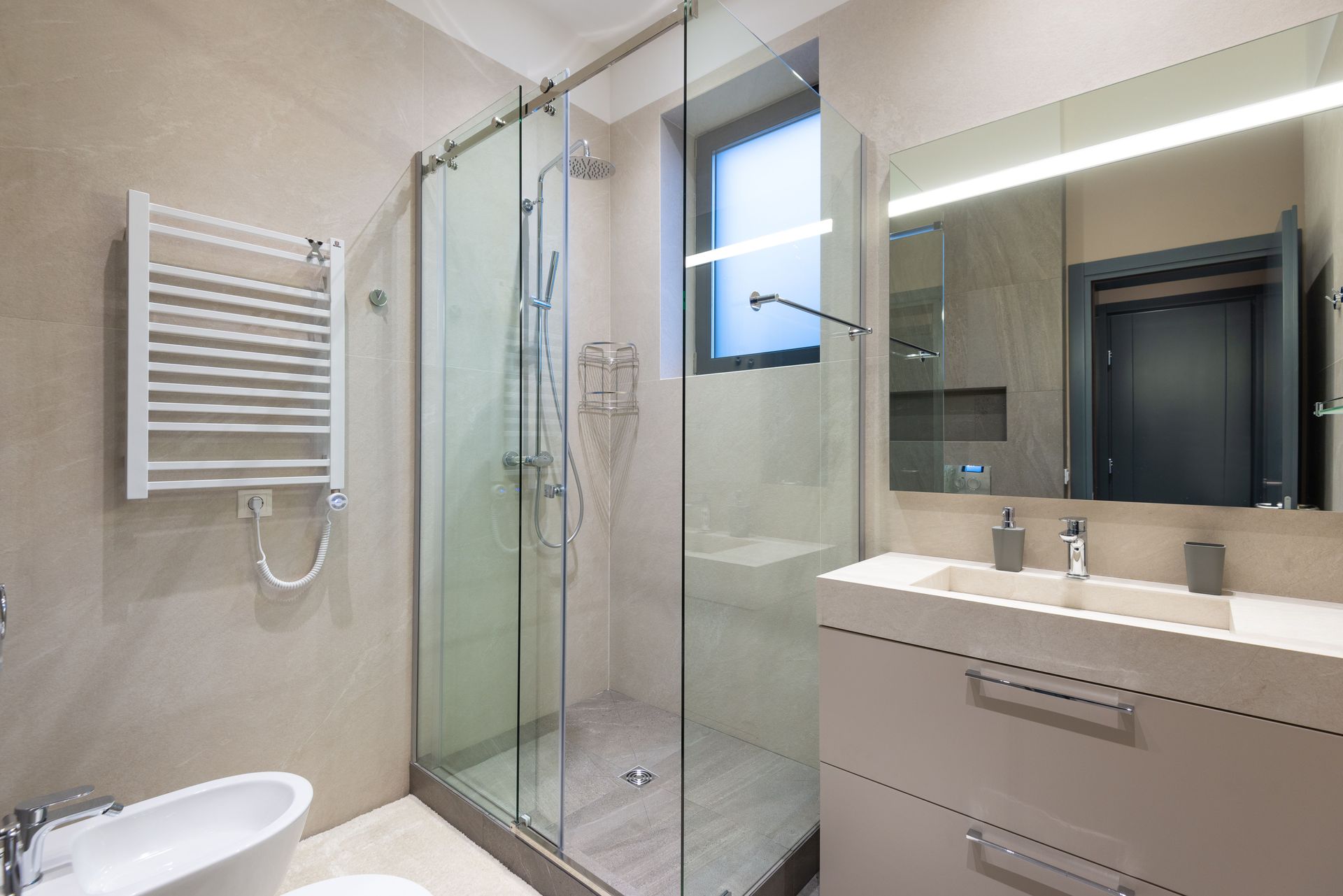
After the custom shower finishes, you see grout joints that remain consistent in color without darkening from mold growth, tile surfaces that stay secure without hollow spots or cracks radiating from corners, and waterproofing that directs moisture toward the drain instead of migrating behind walls where it rots framing. Shower pans slope properly so water does not pool in corners, and niche installations integrate with the waterproofing membrane without creating leak paths that soften drywall outside the shower enclosure.
Tile and custom shower installation includes substrate preparation, waterproofing membrane application, mortar and grout selection based on tile format and exposure, tile layout and installation, fixture rough-in coordination, niche or bench framing if included, and final sealing. Renno-Pro manages material specification so product performance matches the application rather than relying on one-size-fits-all defaults that fail prematurely under hard water or humidity stress.
Common Tile and Shower Questions
Homeowners planning custom tile work and shower installations in the Fort Hood area typically ask about material selection, waterproofing methods, and how product specification affects long-term durability in Central Texas conditions.
Why does mortar type matter for tile installation?
Mortar selection depends on tile size, substrate composition, and moisture exposure—large-format porcelain requires polymer-modified thin-set with extended open time, natural stone needs pH-neutral adhesives to prevent staining, and wet areas demand waterproofing-compatible mortars that bond without compromising the membrane seal.
How does grout selection affect shower durability in Copperas Cove?
Central Texas hard water and humidity cycles stress grout joints, so material choice matters: epoxy grout resists mold and staining in steam showers, urethane grout flexes at change-of-plane joints without cracking, and standard cementitious grout works in dry areas when properly sealed—defaulting to one product type across all applications causes premature failure.
What does a custom shower build include beyond tile installation?
The scope includes substrate preparation, waterproofing membrane application at the pan and walls, mortar and tile installation, shower pan sloping to direct water toward the drain, niche or bench framing if specified, fixture rough-in coordination, and final grout and sealant application.
How is waterproofing integrated with tile in a custom shower?
Waterproofing membrane goes down at the shower pan and up the wall substrate before tile installation begins, creating a continuous barrier that directs moisture toward the drain—mortar must bond to the membrane surface without puncturing or compromising the seal, which requires compatible product selection and proper installation technique.
What separates a quality tile installation from a fast-turn job?
Ask how mortar and grout types are selected for the specific tile format and exposure conditions, whether waterproofing membrane integrates properly with the tile assembly, and if the installer specifies products based on application requirements or defaults to the same materials on every job.
Renno-Pro handles tile and custom shower installations across Copperas Cove, Killeen, Harker Heights, and the surrounding Central Texas service area with material specification tailored to tile format, substrate type, and moisture exposure. Schedule a consultation to discuss custom shower options and tile selections suited for your bathroom conditions.